Your Right to Purity’ is the philosophy with which the Late Gourango Chandra Ghosh established the Annapurna Group in 1952. He firmly believed that it was the company’s duty to look after its customers’ health and well-being.
Your Right to Purity’ is the philosophy with which the Late Gourango Chandra Ghosh established the Annapurna Group in 1952. He firmly believed that it was the company’s duty to look after its customers’ health and well-being.
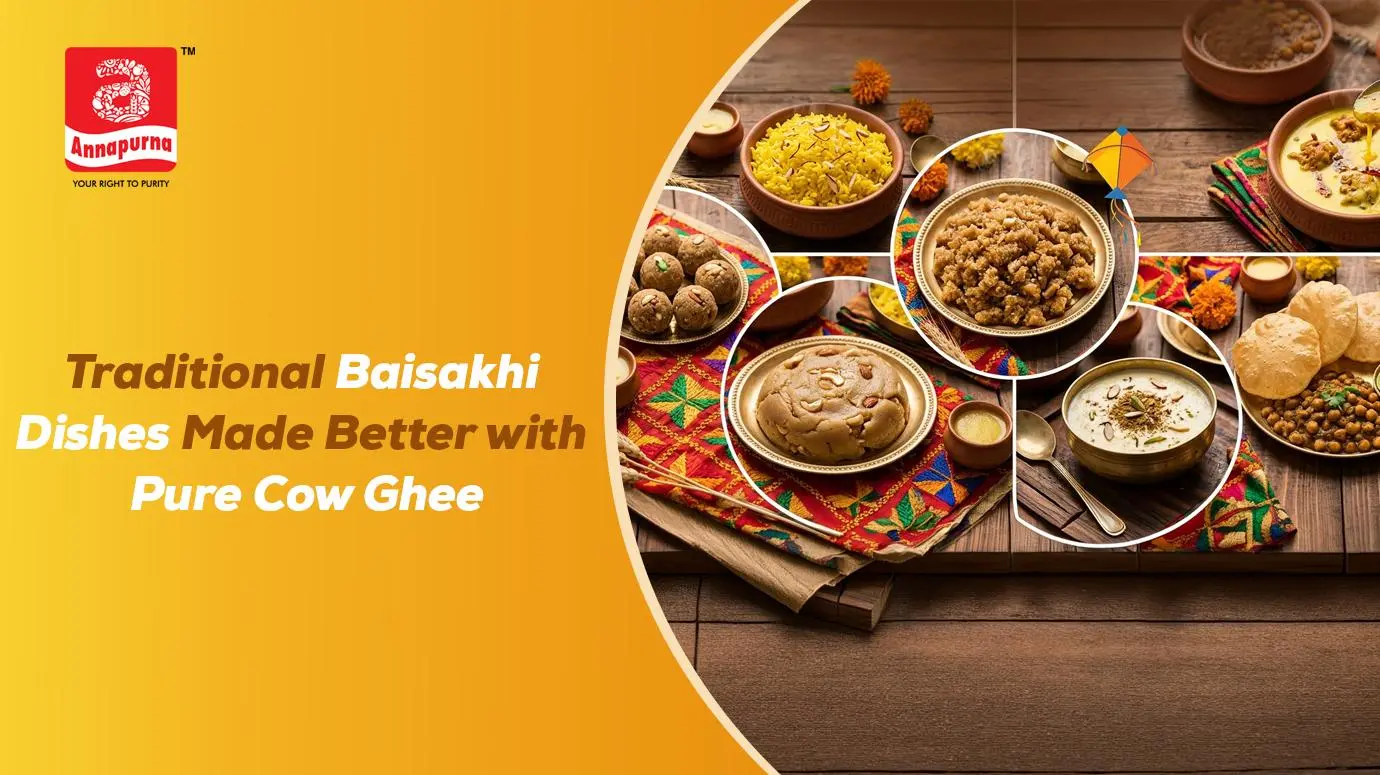
Traditional Baisakhi Dishes Made Better with Pure Cow Ghee
30 Mar 2026
Baisakhi is more than just a harvest festival; it’s a feeling. A sense of new beginnings, खेतों की खुशबू, and homes filled with the warmth of celebration. In many households, especially across Punjab, the day doesn’t feel complete without a spread of comforting, home-cooked food shared with family.
And interestingly, it’s often the simplest dishes that stay with you the longest.
In many homes, Baisakhi preparations don’t begin on the day itself. There’s a quiet build-up, soaking rice for kheer the night before, planning the menu, deciding what to cook for everyone. These small rituals, though simple, make the festival feel more personal.
At the centre of it all is one ingredient that rarely gets the spotlight but makes all the difference, cow ghee.
There’s something about the aroma of pure cow ghee that instantly elevates food. It doesn’t just add richness; it brings everything together. You’ll notice it most in festive cooking,the way it enhances flavour, gives dishes a fuller taste, and somehow makes even the simplest recipes feel special.
If you’re planning to celebrate at home this year, here are some traditional Baisakhi dishes that become even more memorable with the goodness of pure cow ghee.
Traditional Baisakhi Dishes You Can Make at Home
1. Kada Prasad
Kada prasad is not just a dish, it’s an emotion. Made with whole wheat flour, sugar, and cow ghee, it’s simple, yet deeply comforting.
What really defines a good kada prasad is its texture and aroma. And honestly, that comes down to the ghee. When made with pure cow ghee, it has that smooth, melt-in-the-mouth consistency and a fragrance that feels instantly familiar.
2. Meethe Chawal
Meethe chawal, or sweet rice, is a festive staple that’s both light and flavourful. With saffron, sugar, and dry fruits, it’s not overly rich, but just enough to feel indulgent.
A small addition of cow ghee while cooking makes a noticeable difference. The rice grains stay separate, the aroma improves, and the dish just tastes more complete.
3. Punjabi Kadhi Pakora
Kadhi pakora is one of those dishes that brings comfort with every bite. Slightly tangy, warm, and satisfying, it balances out the festive spread perfectly.
Adding a spoon of cow ghee during tempering gives it a deeper, more rounded flavour. It’s a small step, but one that you can actually taste.
4. Chole with Poori
Chole with poori is a festive favourite that never really goes out of style. The bold spices of chole paired with soft, fluffy pooris make it a go-to dish for celebrations.
Finishing the chole with a bit of cow ghee adds richness without overpowering the spices. And pooris, when made with even a hint of cow ghee, turn out softer and more flavorful.
Popular Baisakhi Sweets Recipes
1. Kheer
Kheer is one of those Baisakhi sweets recipes that feels comforting no matter when you have it. Made with rice, milk, and sugar, it’s simple, but the process makes all the difference.
Roasting the rice lightly in cow ghee before cooking adds a subtle nuttiness. It’s a small step, but once you try it, you’ll notice how much it changes the final taste.
2. Halwa
Halwa is almost a must during festivals. Whether it’s suji halwa or atta halwa, the richness comes from the ghee used.
And if you’ve ever compared, you’ll know halwa made with good cow ghee just tastes better. It’s smoother, richer, and has that signature aroma that makes it hard to resist.
3. Pinni
Pinni is a traditional Punjabi sweet that’s dense, rich, and full of flavour. Made with flour, jaggery, and cow ghee, it’s one of those sweets where the quality of ingredients really shows.
Since ghee is a major part of the recipe, using pure cow ghee ensures the right texture and binding, making the sweet more enjoyable.
Easy Baisakhi Recipes for Modern Kitchens
Not everyone has the time to prepare elaborate meals, and that’s completely okay. Today, many people prefer easy Baisakhi recipes that are quick but still feel festive.
Simple dishes like jeera rice, dry aloo sabzi, or even a quick halwa can do the job. The trick is in the finishing, adding a spoon of cow ghee right at the end.
It’s surprising how such a small step can completely change the dish. The flavour becomes richer, the aroma stronger, and the food instantly feels more festive.
‘Festive cooking mein kabhi kabhi complexity se zyada simplicity kaam karti hai, bas ingredients sahi hone chahiye.’
The Role of Cow Ghee in Traditional Baisakhi Food
Cow ghee has always been a part of festive cooking, and not just for taste.
It enhances flavour, improves texture, and adds a richness that’s hard to replicate. But more than that, it connects food to tradition. It’s one of those ingredients that has been used for generations, especially during festivals.
When used in Baisakhi dishes, cow ghee helps maintain that authenticity. It keeps the recipes closer to how they were originally made, simple, rich, and satisfying.
Tips to Make Your Baisakhi Dishes More Flavourful
If you want your festive food to stand out, a few small things can make a big difference:
Add cow ghee at the finishing stage for better aroma
Roast ingredients like flour or rice in ghee for deeper flavour
Don’t overcomplicate recipes, let the basics shine
Balance your meal with one rich, sweet, and simple savoury dishes
If you’ve ever noticed, even a simple halwa or kheer tastes completely different depending on the ghee used. It’s a small detail, but one that’s hard to ignore once you’ve experienced it.
Celebrating Baisakhi with Food That Feels Like Home
At the end of the day, Baisakhi is about togetherness. Moreover, it’s about sitting down with family, sharing food, and enjoying the moment. It’s not about making everything perfect. It’s about making food that feels right, familiar, comforting, and made with care.
Adding pure cow ghee to your cooking is a simple way to bring that feeling into your meals. It enhances flavour, yes, but more importantly, it keeps the tradition alive.
And honestly, that’s what Baisakhi food is really about.
FAQS
What are the traditional Baisakhi dishes?
Traditional Baisakhi dishes include kada prasad, meethe chawal, kheer, halwa, and chole with poori. These recipes are simple and comforting, often prepared using pure cow ghee for better flavour.
Which sweets are prepared during Baisakhi?
Popular Baisakhi sweets recipes include kheer, halwa, and pinni. These sweets are commonly made with cow ghee, which adds richness and improves texture.
Why is cow ghee used in Baisakhi recipes?
Cow ghee enhances flavour, adds richness, and plays an important role in traditional cooking. It helps bring out the authentic taste of festive dishes.
What are some easy Baisakhi recipes to make at home?
Easy Baisakhi recipes include meethe chawal, simple halwa, jeera rice, and dry sabzi. Adding cow ghee makes these dishes more flavourful and festive.



 30 Mar 2026