Your Right to Purity’ is the philosophy with which the Late Gourango Chandra Ghosh established the Annapurna Group in 1952. He firmly believed that it was the company’s duty to look after its customers’ health and well-being.
Your Right to Purity’ is the philosophy with which the Late Gourango Chandra Ghosh established the Annapurna Group in 1952. He firmly believed that it was the company’s duty to look after its customers’ health and well-being.
Navratri Fasting Food: What Can You Eat? Recipes to Try
10 Sep 2026
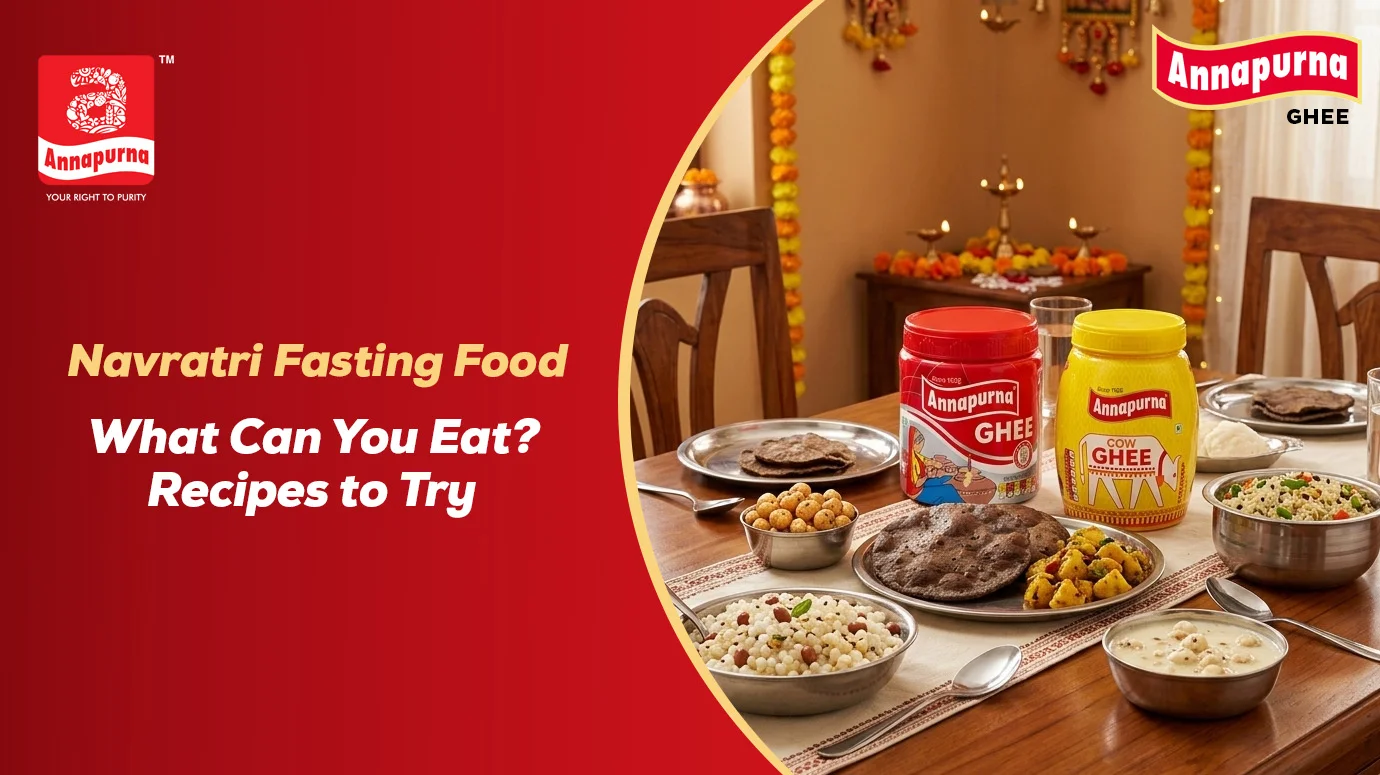
Navratri fasting food is often pretty simple, but that does not mean your meals have to be repetitive. From sabudana khichdi and kuttu preparations to makhana, fruits and vrat-friendly sweets, there are plenty of ways to put together flavourful meals while following traditional fasting practices.
If you are wondering what you can eat during Navratri fasting, you’ll find plenty of simple and wholesome Navratri fasting food options made with ingredients allowed during the fast. While fasting rules can vary between families and regions, people commonly use ingredients such as sabudana, kuttu, singhara atta, samak rice, makhana, fruits, dairy, and sendha namak.
What Can You Eat During Navratri Fasting?
A typical Navratri fasting food spread may include fruits, milk and curd, potatoes and sweet potatoes, sabudana, makhana, nuts and fasting-friendly flours such as kuttu, singhara and rajgira. People also commonly use samak rice as an alternative to regular rice.
Instead of relying on the same potato dish every day, you can combine these ingredients in different ways to make complete meals, snacks and even desserts.
It is also worth remembering that vrat rules are not exactly the same everywhere. Some families follow stricter fasts, while others include a wider range of vrat-friendly foods. So, follow the fasting traditions you observe at home.
Which Foods Are Usually Avoided During Navratri Fasting?
When planning Navratri fasting food, people commonly avoid regular grains such as wheat and rice, many pulses, onion and garlic, and ordinary table salt. Instead, they generally use sendha namak.
The exact list can differ depending on the type of fast and regional traditions, so it is always a good idea to check the practices followed in your household.
What Are Some Easy Navratri Fasting Recipes to Try?
Once you know which ingredients you can use, Navratri fasting recipes become much easier to plan. Here are a few simple ideas:
Sabudana Khichdi
A classic fasting favourite, sabudana khichdi combines soaked tapioca pearls with potatoes, peanuts, green chilli and simple seasoning. Ghee adds richness to the dish and makes it a satisfying breakfast or lunch option. Sabudana khichdi remains one of the most commonly featured vrat dishes.
Kuttu Roti with Aloo
You can use kuttu atta to make rotis or other vrat-friendly preparations. Pair a kuttu roti with a simple jeera aloo or another fasting-friendly potato dish for a comforting meal.
Samak Rice Pulao
Missing your usual rice-based meals? You can turn samak rice into a simple pulao with potatoes, peanuts, cumin and green chilli. A little pure ghee can add richness without making the dish complicated.
Roasted Makhana
For those moments between meals, roasted makhana is an easy option. Toss it with a little pure ghee, sendha namak and your preferred vrat-friendly seasoning for a light, crunchy snack.
Makhana Kheer
Fasting does not mean giving up dessert. Makhana is a simple addition to Navratri fasting food, cooked with milk, sugar or jaggery, cardamom and nuts to make a festive sweet. Roasting the makhana in pure ghee first also adds a pleasant nutty flavour.
Can You Use Pure Ghee During Navratri Fasting?
Yes, pure ghee is commonly used in vrat cooking, and many Navratri fasting traditions permit it among dairy products.
You can use it for sautéing potatoes, preparing sabudana khichdi, roasting makhana, cooking samak rice or making fasting-friendly sweets. Beyond adding flavour, ghee works particularly well in these recipes because the ingredient list for vrat cooking is often relatively simple.
The important thing is to use ghee according to the fasting practices you follow at home.
How Can You Make Navratri Fasting Food More Interesting?
The easiest way is to stop thinking of fasting food as a handful of fixed dishes.
Use the same ingredients differently. Turn kuttu into rotis or cheelas, use makhana for both savoury snacks and kheer, and alternate between sabudana, samak and fruit-based meals. Fresh coriander, lemon, cumin, green chilli and roasted peanuts can also add plenty of flavour to otherwise simple dishes.
This gives you variety without making your navratri fasting recipes unnecessarily complicated.
FAQs About Navratri Fasting Food
Can we eat ghee during Navratri fasting?
Ghee is commonly permitted during Navratri fasting, although individual fasting practices may vary. People traditionally use it in several vrat preparations.
Is sabudana allowed during Navratri fasting?
Yes, sabudana is one of the most commonly used ingredients for vrat-friendly dishes such as khichdi, vada and kheer.
Can we eat potatoes during Navratri fasting?
People commonly include potatoes in Navratri fasting meals and use them in dishes such as jeera aloo, sabudana khichdi and kuttu preparations.
Which flour can be eaten during Navratri fasting?
People commonly use kuttu, singhara and rajgira flours in fasting recipes instead of regular wheat flour.
Can we eat makhana during Navratri fasting?
Yes, people widely use makhana in vrat cooking. You can roast it as a snack or use it to prepare dishes such as makhana kheer.
Making Your Navratri Fasting Recipes More Enjoyable
Fasting does not have to mean settling for the same meal every day. With a few familiar ingredients and some simple cooking ideas, you can create everything from filling meals to quick snacks and festive sweets.
Whether it is a bowl of sabudana khichdi, kuttu roti with potatoes, roasted makhana or a comforting kheer, the right combination of traditional ingredients can make your Navratri fasting food both simple and enjoyable.



 10 Sep 2026